Alcalá del Júcar
What to see in Alcalá del Júcar: 10 essentials
The castle, the caves, the Roman bridge, the bullring and the viewpoints that explain why this is one of the most beautiful villages in Spain.
Published on · 4 min read
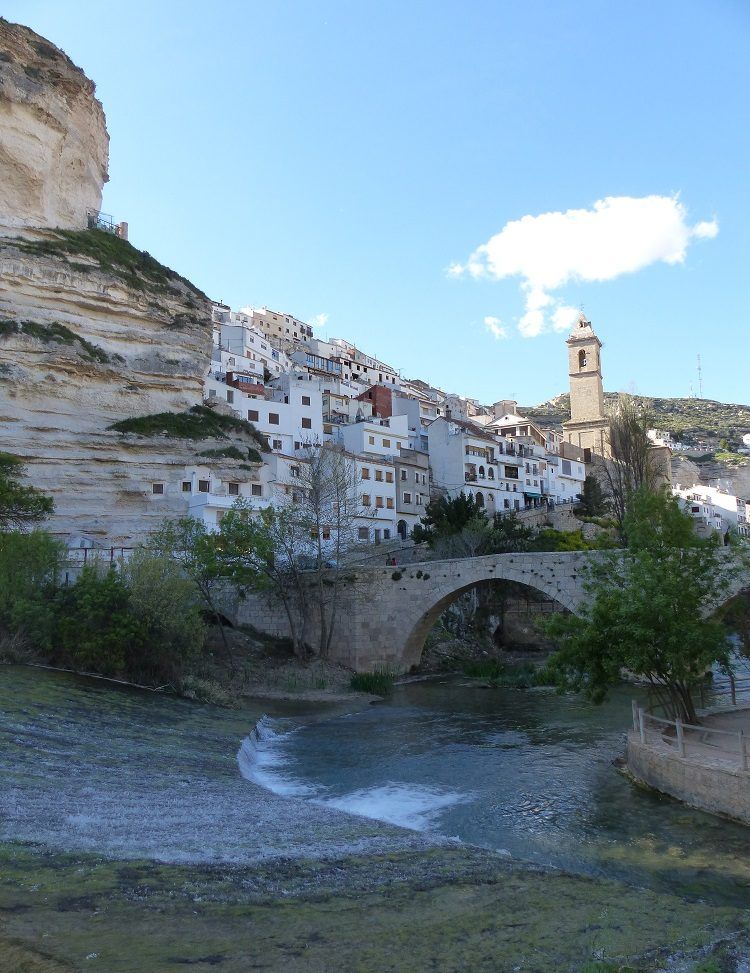
Alcalá del Júcar surprises you before you arrive. The road winds down into the Júcar gorge and suddenly the village appears, hanging from the hillside: whitewashed houses stacked up to the castle, the river at their feet and the bridge crossing it. It is a listed Historic-Artistic Site and a member of the association Los Pueblos Más Bonitos de España, and once you are inside you understand why.
This is our list of what not to miss. Everything is a short walk from our homes, so you can see it all at an easy pace over a weekend.
1. The castle
It crowns the village from the top of the rock. It is of Almohad origin, from the 12th and 13th centuries, and keeps its pentagonal keep and part of the walls. It can be visited, and from the top you see the whole meander of the Júcar: the bridge, the market gardens, the caves and the walls of the gorge. It is the first stop we recommend, ideally late in the afternoon.
2. The caves
Cave houses are the hallmark of Alcalá del Júcar. Many are still lived in, and several can be visited:
- Cueva del Diablo. A hand-dug tunnel of more than a hundred metres that runs through the mountain and comes out onto balconies above the river. Inside there is a small museum of old objects and a bar with the best views in the village.
- Cueva de Garadén. Linked to the legend of the Moorish king Garadén. It winds through the rock to the edge of the gorge and also has a terrace.
- Cuevas de Masagó. Another route through the inside of the rock with viewpoints over the Júcar.
Our Casa Cueva Claudia is carved into the same rock, if you would like to sleep in one.
3. The Roman bridge and the riverside walk
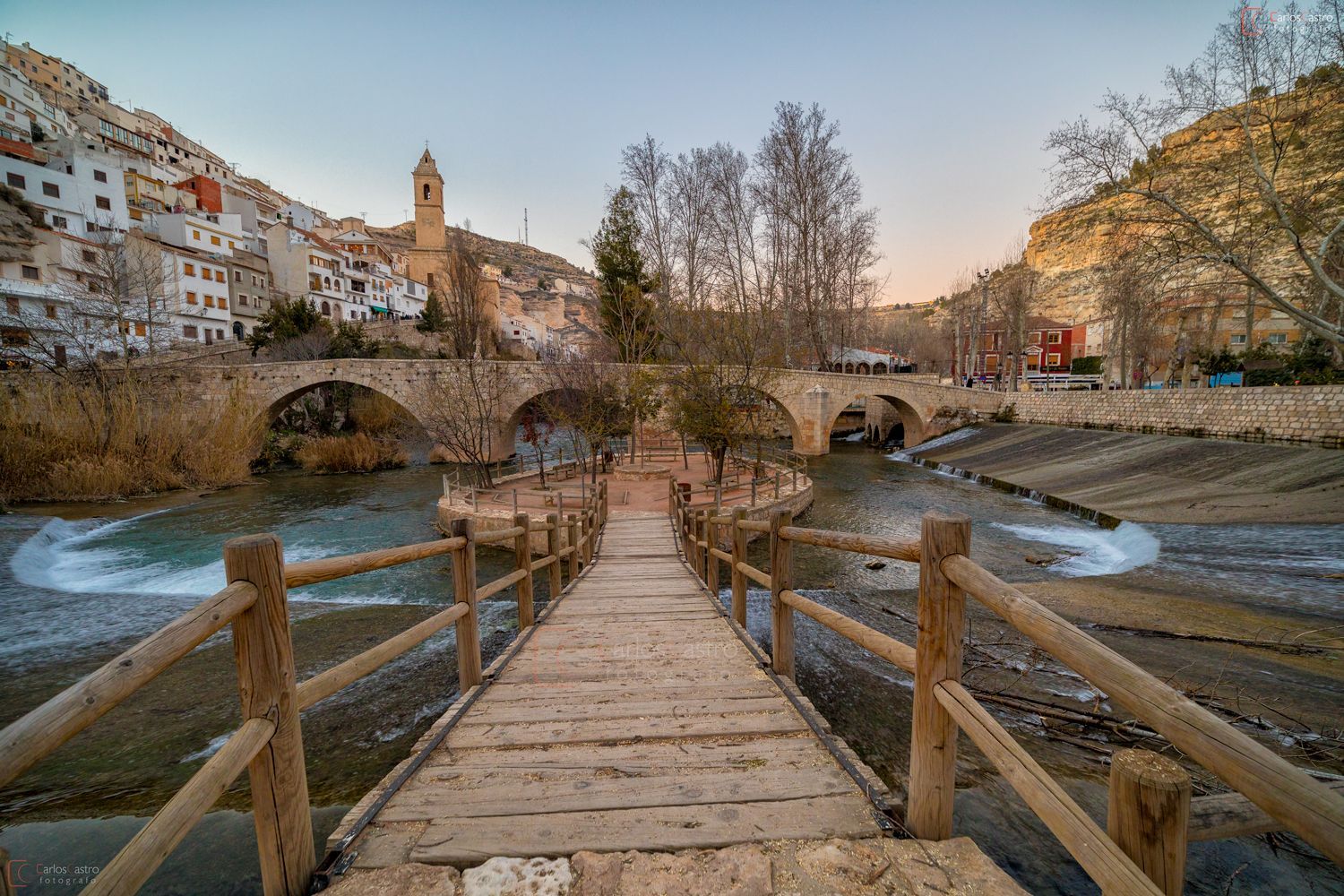
The bridge over the Júcar is of Roman origin and has been rebuilt several times. It is where the classic photo of the village is taken. On both banks there is a walk lined with poplars and benches that stays cool even in summer, and there are calm bathing spots along the shore.
4. The church of San Andrés
Built between the 15th and 18th centuries, it mixes Gothic, Renaissance and Baroque elements. Its tower rises above the houses and serves as a landmark from anywhere in the village. Worth stepping inside if it is open.
5. The bullring
One of the most unusual in Spain because it is not round: its irregular shape follows the slope it was built on. It is in the lower part of the village and can be visited.
6. The hermitage of San Lorenzo
San Lorenzo is the patron saint of the village and its festivities are held around 10 August. The hermitage stands at the top, next to the road into the village, and the walk up to it is short, with views of the castle and the valley. We describe it in our guide to hiking trails.
7. The streets of the old town
Slopes, staircases, passageways and whitewashed houses with coloured doors. The best plan is to get lost without a map between the river and the castle. Every corner has a different view of the gorge.
8. The Casas del Cerro viewpoint
Casas del Cerro is a hamlet of Alcalá on the upper edge of the gorge. From its viewpoint you see the whole village head-on, with the castle, the church and the bridge in a single frame. It is a few minutes by car and the best panorama of all.
9. The Júcar gorge
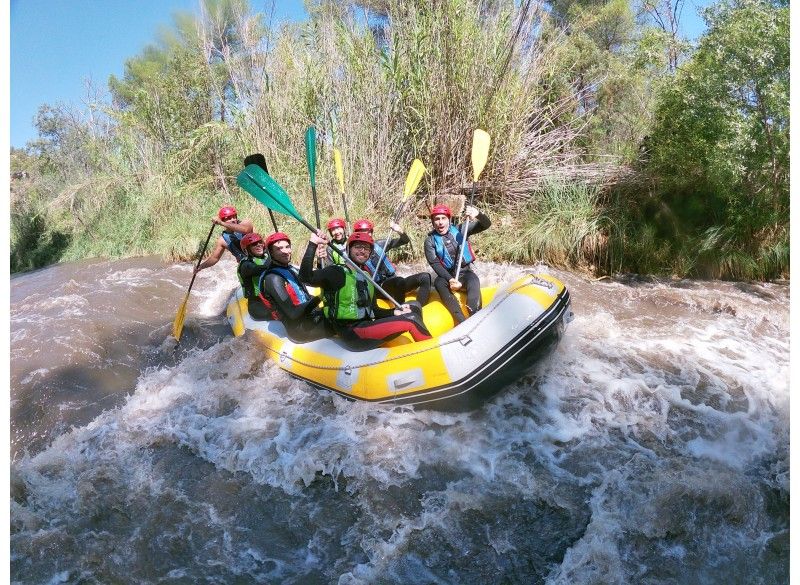
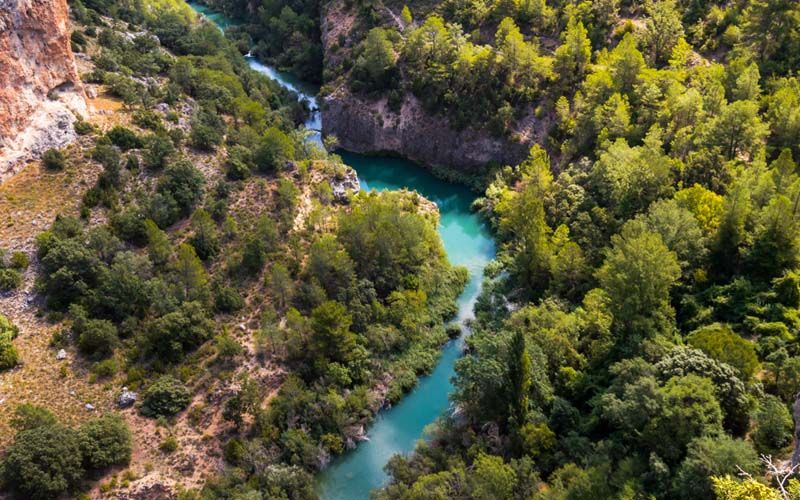
The canyon the river has carved into the rock over the centuries. Walls up to a hundred metres high, meanders, pine woods and birds of prey. Enjoy it from the roadside viewpoints, on foot along the trails that start in the village, or from the water by canoe or raft. More on our surroundings page.
10. Tranco del Lobo and the Molinar reservoir
A few kilometres downstream the Júcar narrows even further. Tranco del Lobo keeps the abandoned settlement and ruined church of an old hydroelectric plant, and the Molinar reservoir is the largest in La Manchuela. They are places to walk, fish or swim far from the crowds.
Practical tips
- Park in the upper part of the village or by the river and move around on foot. The streets of the old town are very narrow.
- Spring and autumn are the best seasons: mild temperatures and fewer people. In summer, start early and leave the river for the afternoon.
- In August there are festivities and a lively atmosphere. If you come then, book your accommodation in advance.
- Bring comfortable shoes: it is all slopes and stairs.
If you want to plan your visit day by day, see our weekend plan for Alcalá del Júcar. And if you are looking for somewhere to stay, our homes are in the heart of the village.
- village
- heritage